Last month we covered how to find reproductive health clinics and access their services if you're uninsured. While different people need different reproductive health services for different reasons, one purpose most people use them for most of the time, is to obtain contraception to prevent an unwanted pregnancy. Certain contraceptive methods may also reduce the risk of STD transmission, or can help to alleviate symptoms of disorders like polycystic ovary syndrome.
Unfortunately, depending on what kind of contraception best suites your needs, getting it if you don't have medical insurance can be expensive. Here are some ways you might be able to reduce your costs, without forgoing contraception or increasing your risk of an unwanted pregnancy.
The Condom: Many people reach for the rubber love-glove as their first method of contraception, and for some this remains their method of choice. When used correctly, condoms or "male" condoms, are 98% effective in preventing an unwanted pregnancy(1), and remain the best protection against HIV(2) and certain other STDs for those that are sexually active.
The costs of condoms over a year can vary widely, depending on how many instances of sexual contact requiring protection you have in a twelve month period. As it is necessary to use a condom for each time you have sex even if neither party climaxed, if you're having intercourse multiple times a day, every day, using condoms becomes less cost effective, especially if you're not worried about contracting an STD (i.e. you and your partner are in a monogamous relationship, and you both have tested negative for STDs).
Pros: 98% effective against unwanted pregnancy with consistent and perfect use, no prescription necessary, can be used immediately, widely available
Cons: Some users may feel a "loss of intimacy and spontaneity" or discomfort, consistently perfect use is rare
How to get it: Condoms are widely available from many different retail outlets, from drug stores, to specialty shops, to the ubiquitous supermarkets across the American landscape. While the price per unit can range up to $1.50 per unit for premium varieties in a national pharmacy chain, online retailers may carry the varieties, for less. Drugstore.com for example, sells Durex Performax Intense condoms for $7.99, $6.00 less than the recommended retail price. Beyond trawling amazon.com for the prophylactic of your choice, searching via Google's shopping engine may also help you to find the best value on barrier contraceptives.
Larger manufacturers also often issue coupons or provide special offers through their official websites or through the SmartSource printable coupon service. Trojan is currently offering up to $5.00 off select products through this form here. Then there's also CondomUSA's free sample section, which will send a free sample of condoms for the price of shipping and handling.
The "Female" Condom: Similar to the male condom in that it is also a barrier method of contraception and STD prevention, the female condom is worn internally for penetrative intercourse. 95% effective against unwanted pregnancy with perfect use(3), it also provides some protection against the transmission of STDs.
Female condoms typically cost between $2.50 and $4.00 per unit, and while they are more expensive than male condoms, they enable the receptive partner to take control of their sexual health and/or fertility if their partner refuses to wear a "male" condom. Female and male condoms should never be used together during intercourse as they are likely to break.
Pros: 95% effective against unwanted pregnancy with perfect and consistent use, no prescription necessary, allows the receptive partner more control over their sexual health, can be used by people allergic to latex
Cons: Not as widely available as the male condom, higher price per unit, the failure rate from typical use of female condoms is somewhat higher than male condoms or barrier contraceptive methods suggesting that some find it more complicated or difficult to use, some users feel it reduces feeling during intercourse
How to get it: While not as widely available as the male condom, female condoms are available throughout the United States from Planned Parenthood, other family planning and reproductive health clinics, pharmacies, in some supermarkets and online. As of this writing, the national drugstore chain Walgreens stocks the FC2 and is currently offering a three count package for $4.79, which brings the price per unit down to about $1.60. This third party retailer at Amazon.com sells a ten count package for $12.25, bringing the cost down to $1.23 unit, which comparable to what one would pay per unit at a drug store for male condoms. If your pharmacy, supermarket or reproductive clinic doesn't currently stock female condoms, ask them to do so in the future.
The Diaphragm: the diaphragm is a shallow dome-shaped cup with a flexible rim; it works by covering the cervix to block sperm from entering the opening to the uterus. To improve effectiveness, spermicidal cream, gel, or jelly should be used in conjunction with the diaphragm. When used as directed, only 6 in 100 women will become pregnant over a year of using the diaphragm as their contraceptive method.
In order to get a diaphragm, you must first be examined by a health care provider and be given a prescription, which can filled by most local pharmacies. Unfortunately, the requirement of an examination increases the upfront cost of the diaphragm and makes it less convenient option for some. Depending on your appointment cost and the cost of the diaphragm itself, the combined total ranges from $65 - $275, plus an additional $8- $17 for a spermicide kit. However, the diaphragm, when properly cleaned and cared for can last up to two years, which will off-set some of these higher costs.
Pros: Portable, cannot usually be felt by you or your partner during intercourse, can be inserted hours before sex so there is no interruption of the proceedings, lasts for up to two years
Cons: Requires an examination and prescription, higher up-front costs, can be pushed out of place during intercourse, some women develop frequent urinary tract infections with diaphragm use, does not provide protection against STD transmission and spermicide use can increase the risk of HIV transmission
How to get it: First, as mentioned make an appointment with a health care provider. This can be done at most planned parenthood clinics, reproductive health centers and traditional OB-GYN offices. If you're uninsured or on Medicaid or another state health program, a planned parenthood, state-run clinic or charitable clinic are likely to be best bets for getting seen for an appointment and getting help with costs or financing. Once you've gotten a fitting and prescription for your diaphragm, there isn't too much you can do to decrease the cost of filling the prescription if you don't have insurance.
One way to decrease your overall cost is to clean and care for your diaphragm. Assuming it lasts a full two years, an upfront cost of $275 breaks down to a base cost of about $0.38 per day. This does not include the additional cost of spermicide applications which will vary depending on the frequency of intercourse.
The Sponge: Unavailable in the US market for over a decade after 1995, some people of a certain age may not have heard for the contraceptive or "Today" sponge, unless, they too watched Seinfeld reruns in junior high. This method offers some of the same benefits as a diaphragm but doesn't require a prescription or a medical visit in order to get it. The effectiveness of the sponge in preventing unwanted pregnancies varies depending on whether or not you've already given birth and whether or not it's used as directed. Women who have not already given birth and use the sponge as directed can expect 91% effectiveness rate in preventing pregnancy, but women using the sponge as directed who have given birth before can only expect about an 80% effectiveness rate in preventing pregnancy.
The sponge works by covering the cervix to prevent sperm from entering the uterus and by continually releasing a spermicide that stops sperm from moving. Like the diaphragm, it can be inserted hours before intercourse and worn for up to twenty-four hours after insertion. The sponge must be left inserted for an additional six hours after intercourse in order to be effective, and should never be left inserted for more than thirty hours.
Pros: Does not require a prescription, portable, can be inserted before sex so it is not necessary to interrupt foreplay, and cannot be felt by your or your partner during intercourse
Cons: Removal can be difficult especially for inexperienced users, does not protect against STD transmission, some users report it makes sex "dry"
How to get it: Despite being totally unavailable in the US market for over ten years, the contraceptive sponge is now widely available, and is at the time of this writing, also on sale at Walgreens. After browsing various online retailers, the best price per unit we could find for the sponge was $3.88 at otcitems.com, with prices from other retailers ranging from $4.18 to $4.66 per unit. There is also a 10% off coupon code for todaysponge.com up at RetailMeNot. In addition to being widely available online, and in some supermarkets and drugstores, the sponge is also available from family planning clinics.
The IUD: A T-shaped device that is inserted into the uterus, the IUD can last between 5 and twelve years, depending on the type used. It works by affecting sperm movement, preventing them from joining with an egg. The Mirena IUD also contains progestin, which prevents the ovulation, which also helps to prevent sperm and egg from joining together. The IUD is a highly effective form of birth control, with fewer than 1 out of 100 women who use the IUD becoming pregnant within a year.
It does not protect against or reduce the risk of STD transmission and may not be safe to use for some women who are on certain medications, have an STD, or have had a pelvic infection following abortion or child birth within the last three months.
Pros: Lasts for years, can be used while breastfeeding, may improve your sex life by enabling you and your partner to be more spontaneous
Cons: Some women experience mild to moderate pain after initial insertion, spotting, and/or irregular or heavier periods, there's also the possibility of IUD slipping out of place or pushing through the wall of the uterus, high upfront costs.
How to get it: To get an IUD, you have to first meet with a health care provider for a consultation. Consultation experiences can vary from clinic to clinic and you may have to have a pelvic exam and an ultrasound in addition to a discussion of your medical history and reasons for wanting to use the IUD with your provider before getting an IUD inserted. Costing between $500 and $1000 the upfront costs for an IUD and insertion can be high in comparison to other forms of birth control, but may even out as a single IUD lasts from five to twelve years. Even assuming that a $1000 IUD will last only five years, the per day cost breaks down to about $0.55 per day.
Unfortunately, if you've decided that the IUD is the best contraceptive method for you, there isn't much one can do to decrease the initial costs. Some clinics will provide this service on a sliding scale based on your income, or will help you work out a payment plan. You may also be able to lower your costs if you qualify for a federal or state medical program. Check out this chart to see if you might qualify for medicaid.
The Pill: One of the most popular and well known methods of contraception, the birth control pill works by releasing hormones that prevent a woman from ovulating. Without ovulation, the ovaries don't release an egg, which prevents sperm from being able to meet with an egg, which prevents pregnancy from occurring. The pill is one of the most effective forms of contraception with fewer than 1 in 100 women becoming pregnant over year, as long as it is taken as directed. When not taken as directed, about 9 in 100 women will become pregnant over a year of using the birth control pill.
Pros: Reduced menstrual cramps, lighter periods, enables more spontaneous intercourse, offers some protection against Pelvic Inflammatory Disease which can cause infertility if not treated. Some types of birth control pills may have other benefits such as protecting against acne, bone thinning, breast and ovarian cysts, and ovarian cancers.
Cons: Some women experience spotting, breast tenderness, nausea, decrease in sexual desire and mood swings, especially in the first three months of use, no protection against STD transmission, increases the risk of stroke and blood clotting in some women.
How to get it: In order to get birth control pills, you first need a prescription, and may have to have a medical exam. Depending on your provider, this exam can cost from $35-$250. However, some charity or state-run clinics may be able to give you the exam at a reduced cost, or at no cost depending on your income level, age, and occupation. The pills themselves typically cost from $15-$50 per month, with most prescriptions being for a three months' supply. Though these costs are fairly fixed, there are a few things you can do to lower the costs of your birth control pills.
First, ask your health care provider about getting a generic prescription instead of a name-brand pill. While not suitable for everyone since some women take specific kinds of birth control pills to treat symptoms for disorders like endometriosis, generics usually contain the same active ingredients and may be a good alternative for some women. Second, some reproductive health clinics and private health care providers are able to dispense free samples of birth control after they've approved you for a prescription. Asking about this option costs nothing, and can help stretch your contraceptive budget for the year a bit further. Some providers may place restrictions on how many free sample packs they will distribute to you, while others may be able to continue providing you with free samples as long as they have some in the supply closet. Finally, if you're dissatisfied with the cost of your current prescription but aren't able to procure free samples or a cheaper, generic prescription, find out what reproductive health and family planning services clinics are in your area and ask them if they can help you get your birth control pills at a lower cost. Some clinics are licensed to dispense birth control pills and may be able to help you get a three month supply for as little as $20 total.
Emergency Contraception Pill: If your contraception fails, or if you have sex without using a contraceptive device, you may still be able to prevent pregnancy from occurring with emergency contraception. The Morning-After pill or emergency contraception pill works by delivering a dose of hormones that prevent a woman from ovulating. Though the emergency contraception pill can be taken up to 120 hours after unprotected intercourse, it is more effective the sooner it is started. The Morning-After pill cannot terminate a pregnancy once it has occurred; it is not "the abortion pill". Pros: Safe, available from pharmacies without a prescription for those 18 and over, can reduce the risk of unwanted pregnancy by 89% if started within 72 hours of unprotected intercourse
Cons: Possible side-effects include: dizziness, breast tenderness, irregular bleeding, abdominal cramps, nausea.
How to get it: Emergency contraception pills are available over the counter from pharmacies for adults over 17 and is also available from Planned Parenthood. If you're under 17 you will need a prescription from a health center or private health care provider. Costs vary from $10-$70 for the emergency contraception pill, depending on where you get it, and which kind you use. Sometimes the makers of the emergency contraception pills offer manufacturer coupons. Right now, Plan B One Step is offering a $5 off manufacturer's coupon available to print from their website.
In addition to the methods listed here, there are some other contraceptive methods such as the patch, the ring and the shot, that we haven't covered. Also, be aware that the descriptions of the methods and the assessments of their pros and cons as listed here aren't necessarily comprehensive. To find out what contraception method would best suit your needs talk to a health care provider, or find out more about each method at Planned Parenthood's website. Hopefully this list will help you lower your contraception costs and take control of your fertility and sexual well being!
If you have any advice on how to find affordable reproductive health care, or questions about looking after you're health when you're on a budget, we'd love to hear from you! Email us: cheerfullycheap@gmail.com or join us on Twitter: @cheerfulcheep.
Showing posts with label guide to. Show all posts
Thursday, June 7, 2012
Saturday, May 12, 2012
Getting Care When You Can't Afford Coverage: Part 2 Fig.1
Issues around reproductive health are really heating up in some parts of the world this year, particularly in the U.S. as it's in the throes of a madness known as "an election year". As access to birth control is turned into a political football, thousands of men and women find themselves with decreasing or no access to important reproductive health services. Reproductive health often gets reduced to contraceptive issues, and while contraception is an important component, reproductive health issues encompass so much more including: ovarian cancer screening, STD testing, prevention, treatment and management, prostrate cancer screening, prenatal care, fertility counseling and advisement, and breast cancer screening.
Unfortunately, the usefulness of the following guide on obtaining reproductive health services if you don't have health insurance will vary widely depending on where you live in the U.S. Many states this year are dramatically cutting funding for health clinics, often in the interests of pandering to political interest groups, instead of acting in the interests of supporting affordable, accessible healthcare for their constituents.
Finding a Clinic
The first step is to locate the nearest clinic that can provide the services you need. Which services you'll need will vary depending on your gender, age, and whether or not you're already sexually active. The National Association of Free and Charitable Clinics directory is one place to start looking for clinics in the US. It can be difficult to find a clinic that can provide the services you're looking for, as the clinics listed in the directory aren't limited to providing reproductive health services.
A fairly obvious but perhaps more apt starting point for a clinic search, is to locate your nearest Planned Parenthood. In addition to providing the contraceptive and pregnancy services for which they are well known, Planned Parenthood provides a wide array of reproductive health services including: mammograms, pelvic exams, colon cancer screenings, intestinal parasite testing and treatment (or treatment referral), vasectomies, menopause treatments, and fertility testing and referral. Many Planned Parenthood clinics also offer general health services such as: flu vaccines, thyroid testing, smoking cessation, physicals and cholesterol screenings. Most of the services are provided on a sliding scale, with fees adjusted according to your income, or your parents' income if you're under 18.
Unfortunately, many parts of the country only have one or two Planed Parenthood clinics serving an entire state. While staff are dedicated to and passionate about providing affordable reproductive care to clients, areas with few clinics may face exceptionally high demand and potentially longer wait times for appointments. Fortunately, many of the services provided, are done so on a walk in basis, with no appointment necessary in many Planed Parenthood clinics for emergency contraception, pregnancy testing, counseling and referrals. Other clinics may provide STD testing, vaccinations and treatment, and birth control prescriptions or refills on a walk-in basis. Be sure to check the "view hours and service details" link when you use the "find a health center" widget on the right side of the main page.
If visiting a Planned Parenthood is not an option for you, due to extreme distance or long wait times for an appointment, try heading to your state's department of public health and social services. This may take a bit of leg work as each state seems to call this department something different, but if you search for your state's name and "division of public health" or "department of health and social services", the relevant page should come up in the top results. Once you've found the the correct webpage, look for reproductive clinic listings under headings like "family planning services", "division for children, youth, and families", "services for adults", or "clinics". Many of the services offered at these kinds of clinics are free, or offered on a sliding scale basis.
If your main concern is STD testing, vaccinations, and treatment or treatment referral, the following directories will locate your nearest HIV testing or STD testing facility. Some of the clinics listed in these two directories provide testing services for free and they are often marked in the results as doing so. Other facilities provide testing, vaccination and treatment services on a sliding scale.
HIVtest.org: provides listings for the nearest health facilities that provide HIV testing, marking in the results what type of test the clinic provides (Conventional HIV blood testing, rapid HIV blood testing, or both), and what other STD testing and vaccination services they may offer.
National HIV and STD Testing Resources: is a subdivision the HIVtest.org website, and allows you to target your search to find clinics that provide testing services for a variety of STDs. By ticking the boxes under the search bar, you can also search specifically for clinics that provide vaccinations for HPV and Hepatitis B.
Crisis Centers ≠ Medical Clinic
Be wary of any organization calling itself a "pregnancy center", "pregnancy care center", "pregnancy resource center", "pregnancy concern center" or "pregnancy crisis center". These centers pose as reproductive health facilities, but the majority of them are not licensed to provide any actual medical services. The few that are licensed generally limit their services to pregnancy testing and sonograms, with a limited number also providing STD screenings and some prenatal care. Seeking services from these centers is not recommended as they have a history of disseminating false medical information and fabricated statistics. However, they sometimes provide sonograms at no cost, so if you want to get a free ultrasonic look at your fetus, consider seeking out a CPC. Odds are you've already paid for it with your tax dollars, and as there are over 4,000 CPCs compared with only about 750 fully comprehensive reproductive health clinics in the U.S., there should be a center near you, even if the nearest comprehensive clinic is over 100 miles away. Though they often use unscrupulous tactics in their counseling programs, CPCs can be a useful resource for lower income families that are ready to start expanding their family, and want to have a baby. However, if you're seeking contraception advice, cancer screenings, or accurate information regarding abortion, it is best to seek services elsewhere.
We'll be covering contraception, what's available, how to get it, and ways you might find it more affordably in our next article. If you have any advice on how to find affordable reproductive health care, or any questions about getting contraception when you're on a budget, we'd love to hear from you! Email us: cheerfullycheap@gmail.com or join us on Twitter: @cheerfulcheep.
Monday, April 9, 2012
Getting Care When You Can't Afford Coverage: Part 1
Welcome to the first part of an on-going series exploring how to get care when you can't afford coverage. In the coming weeks Cheap and Cheerful will cover some of the options available to those who need health and dental services but don't have insurance and can't afford to pay the astronomical out-of-pocket costs for basic services. Despite recent legislation in the US that extends health insurance to many who would otherwise have no coverage, many adults remain without any kind of coverage for health benefits.
A great deal of the literature published online regarding these issues is incredibly condescending. A cursory search for advice regarding the best way for the uninsured to afford a dental cleaning turned up embarrassingly out of touch articles urging uninsured readers to "give up pay-parking or the daily latte habit for a month" in order to afford a teeth cleaning every six months. To someone working a full-time job, or two jobs or three jobs and struggling to live paycheck to paycheck, this kind of advice is insensitive at best, and outright offensive at worst. In line with our objectives of researching and reporting on ways readers can live better on a budget, this week Cheap and Cheerful will explore some possible alternatives to climbing into the dental hygienist's chair uninsured.
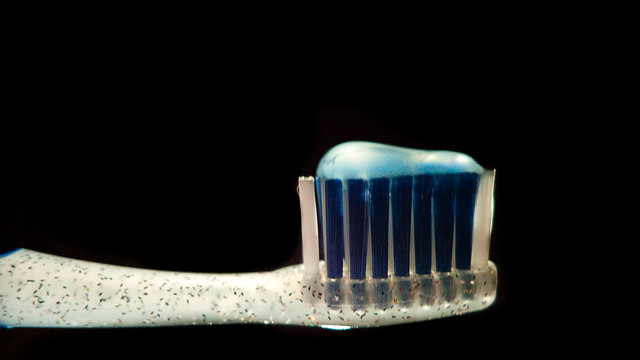
"Toothbrush" CC-BY Lars P.
1) Have Your Teeth Cleaned at a Dental College
Getting your teeth cleaned at a dental college seems to be something many people have heard of, but fewer people have done. Admittedly, like many other things, the ability to obtain cheap teeth cleaning services at a dental college varies greatly depending on your geographical location. In some major cities, there may be 3 or 4 technical colleges offering discounted services to the public in exchange for allowing their students to practice their trade on an actual patient, whereas other towns may be at least 100 miles from the nearest dental college. If you aren't able to find a dental college in your local Yellow Pages, try looking up local vocational or community colleges. Many technical colleges offer associate degree programs for dental hygienists, and so offer cheap teeth cleanings to those willing to let students give-it-a-go on their teeth. After finding a dental college, or a technical college offering qualifications in dental hygiene, do a little additional searching to see if they have a website dedicated to this aspect of their institution. It may not be immediately clear if the number listed in the Yellow Pages entry for the college itself is the best number to call to inquire about a possible community patient outreach program. If searching for the name of the college in conjunction with terms like "patient" "clinic" and "care" doesn't return any useful results try ringing the number in the listing. Even if that number doesn't connect directly to someone who deals with a patient care program, it may connect to someone able to put you through to the right department.
If they are unable or unwilling to connect you, don’t get discouraged. Call back later and tell them you’re interested in the dental hygiene program there, but that you would like some additional information. Then ask them if they can put you through to the department directly, or give you more information on how to contact the program officer. While many colleges have clinics offering services to the public, each school will be different, and not every technical college with a dental program will have a patient care clinic as well. However, asking is free, so it’s worth asking to find out to potentially save significantly on your teeth cleaning costs.
Ideally, at this point you’ve found and spoken with the right person to book your cheap and cheerful teeth cleaning. Outside of showing up on time, the only other thing you’ll likely need to do is to fill out a medical history form upon arrival. The experience of the actual cleaning can vary widely from here, and can depend heavily on the experience of the student cleaning your teeth. It may take a less experienced student a while longer to complete a cleaning than it would a student with more experience. Certain aspects do seem to be standardized though, such as the presence of a licensed dentist or dental assistant overseeing the student’s work. Fees for a cleaning from a dental college can be as low as $10 and seem to top out around $60 in most areas.
Some criticize dental college cleanings, worrying that a dental student may potentially fail to diagnose the early signs of a problem that could later require surgery. However, remember that a dentist oversees student cleanings and that all dental hygienists and dentists were students themselves before becoming licensed professionals. Most dental hygiene students are trained to recognize common problems such as cavities, plaque buildup, and gingivitis. However, if you are experiencing dental pain or have other reasons to believe you could have a problem requiring surgery, the best thing to do is to schedule a consultation with your dentist.
Pros: significantly lower costs for a full teeth cleaning, some facilities may also offer X-ray services, cleanings overseen by a licensed dentist or hygienist.
Cons: variability of appointment availability, appointment lengths may be longer than an average cleaning by a fully licensed hygienist.
2) Try haggling or working out a payment plan with your current dental provider
Negotiating with your dentist can be tricky. Dental services can be expensive, and even basic preventive appointments can be cost prohibitive for those who have real expenses but not a real living-wage. However, many dental practices are small businesses and all dentists and dental hygienists are skilled professionals and like everyone else, they deserve to be compensated for their time. While asking for an outright discount may affront your regular dentist, discussing payment options with your provider is perfectly acceptable. Ask if your dentist offers any services on a sliding fee scale. Offering to pay cash up-front on the day may also increase your negotiating power, saving you as much as 10 percent of the cost of services rendered.
Pros: allows you to continue to receive treatment from your regular dentist or dental hygienist
Cons: not every practice will be able or willing to negotiate payment methods and/or costs
3) Consider Purchasing Teeth Cleaning Services Through a Deal-of-the-Day website
While buying your dental services through a deal-of-the-day website can be riskier than a cleaning from a reputable dental college, carefully reading the fine print can ensure that the deal you are buying fully covers the service or services you need, without requiring you to buy additional services or procedures in order to use the voucher.
Locating a Daily-Deal for a dental cleaning can be difficult, if not impossible to find out right. Sometimes searching for "Teeth Cleaning" or "Dental Care" and the name of a Deal-of-the-Day service produces useful results. Our search for "Living Social Teeth Cleaning" yielded a voucher for General and Cosmetic Dentistry in Tampa, Florida inclusive of a full dental exam, teeth cleaning, set of x-rays and bleaching treatment for $99, and this voucher for either a $49 dental exam, teeth cleaning and full mouth x-ray or a $129 teeth whitening treatment or a $1,8000 surgical tooth implant and custom crown in Macomb County, Michigan.
If today is not your lucky day on both Groupon and Google, then the other option is to periodically check the various deal-of-the-day sites, and bide time until an offer becomes available in your area.
Be sure to read the fine print of any discounted deal carefully. Most vouchers for discount dental services have certain limitations some of which include: non-transferability, the requirement of all services included in the discounted deal to be used by one customer in a single visit, and prohibitions on combining the discount voucher with other offers or promotions. These discount vouchers are also often only valid for new patients who have never visited the practice offering the deal-of-the-day coupon before.
The most obvious advantage to buying dental services through a deal-of-the-day service is the knowledge you'll be receiving treatment from a licensed dental practice. However, the actual level of service between dental practices can vary, so consider looking up reviews or asking for opinions from friends and acquaintances if they've previously used the practice selling the promotional voucher before committing to buying the discount deal.
Pros: obtaining services through a professional dental practice, some additional services such as x-rays and teeth whitening treatments are often included
Cons: level of service from practice to practice can vary, certain limitations and conditions may apply and are not always the same from deal to deal.
Hopefully one of these three options provides you with an option to make the dental care you need more affordable. If the three alternatives discussed aren't right for you, there are other options out there. Check out this article from MONEY Magazine for other ways to save on your dental costs such as joining a discount club, and advice on getting more out of your Flexible Spending Account.
A great deal of the literature published online regarding these issues is incredibly condescending. A cursory search for advice regarding the best way for the uninsured to afford a dental cleaning turned up embarrassingly out of touch articles urging uninsured readers to "give up pay-parking or the daily latte habit for a month" in order to afford a teeth cleaning every six months. To someone working a full-time job, or two jobs or three jobs and struggling to live paycheck to paycheck, this kind of advice is insensitive at best, and outright offensive at worst. In line with our objectives of researching and reporting on ways readers can live better on a budget, this week Cheap and Cheerful will explore some possible alternatives to climbing into the dental hygienist's chair uninsured.
"Toothbrush" CC-BY Lars P.1) Have Your Teeth Cleaned at a Dental College
Getting your teeth cleaned at a dental college seems to be something many people have heard of, but fewer people have done. Admittedly, like many other things, the ability to obtain cheap teeth cleaning services at a dental college varies greatly depending on your geographical location. In some major cities, there may be 3 or 4 technical colleges offering discounted services to the public in exchange for allowing their students to practice their trade on an actual patient, whereas other towns may be at least 100 miles from the nearest dental college. If you aren't able to find a dental college in your local Yellow Pages, try looking up local vocational or community colleges. Many technical colleges offer associate degree programs for dental hygienists, and so offer cheap teeth cleanings to those willing to let students give-it-a-go on their teeth. After finding a dental college, or a technical college offering qualifications in dental hygiene, do a little additional searching to see if they have a website dedicated to this aspect of their institution. It may not be immediately clear if the number listed in the Yellow Pages entry for the college itself is the best number to call to inquire about a possible community patient outreach program. If searching for the name of the college in conjunction with terms like "patient" "clinic" and "care" doesn't return any useful results try ringing the number in the listing. Even if that number doesn't connect directly to someone who deals with a patient care program, it may connect to someone able to put you through to the right department.
If they are unable or unwilling to connect you, don’t get discouraged. Call back later and tell them you’re interested in the dental hygiene program there, but that you would like some additional information. Then ask them if they can put you through to the department directly, or give you more information on how to contact the program officer. While many colleges have clinics offering services to the public, each school will be different, and not every technical college with a dental program will have a patient care clinic as well. However, asking is free, so it’s worth asking to find out to potentially save significantly on your teeth cleaning costs.
Ideally, at this point you’ve found and spoken with the right person to book your cheap and cheerful teeth cleaning. Outside of showing up on time, the only other thing you’ll likely need to do is to fill out a medical history form upon arrival. The experience of the actual cleaning can vary widely from here, and can depend heavily on the experience of the student cleaning your teeth. It may take a less experienced student a while longer to complete a cleaning than it would a student with more experience. Certain aspects do seem to be standardized though, such as the presence of a licensed dentist or dental assistant overseeing the student’s work. Fees for a cleaning from a dental college can be as low as $10 and seem to top out around $60 in most areas.
Some criticize dental college cleanings, worrying that a dental student may potentially fail to diagnose the early signs of a problem that could later require surgery. However, remember that a dentist oversees student cleanings and that all dental hygienists and dentists were students themselves before becoming licensed professionals. Most dental hygiene students are trained to recognize common problems such as cavities, plaque buildup, and gingivitis. However, if you are experiencing dental pain or have other reasons to believe you could have a problem requiring surgery, the best thing to do is to schedule a consultation with your dentist.
Pros: significantly lower costs for a full teeth cleaning, some facilities may also offer X-ray services, cleanings overseen by a licensed dentist or hygienist.
Cons: variability of appointment availability, appointment lengths may be longer than an average cleaning by a fully licensed hygienist.
2) Try haggling or working out a payment plan with your current dental provider
Negotiating with your dentist can be tricky. Dental services can be expensive, and even basic preventive appointments can be cost prohibitive for those who have real expenses but not a real living-wage. However, many dental practices are small businesses and all dentists and dental hygienists are skilled professionals and like everyone else, they deserve to be compensated for their time. While asking for an outright discount may affront your regular dentist, discussing payment options with your provider is perfectly acceptable. Ask if your dentist offers any services on a sliding fee scale. Offering to pay cash up-front on the day may also increase your negotiating power, saving you as much as 10 percent of the cost of services rendered.
Pros: allows you to continue to receive treatment from your regular dentist or dental hygienist
Cons: not every practice will be able or willing to negotiate payment methods and/or costs
3) Consider Purchasing Teeth Cleaning Services Through a Deal-of-the-Day website
While buying your dental services through a deal-of-the-day website can be riskier than a cleaning from a reputable dental college, carefully reading the fine print can ensure that the deal you are buying fully covers the service or services you need, without requiring you to buy additional services or procedures in order to use the voucher.
Locating a Daily-Deal for a dental cleaning can be difficult, if not impossible to find out right. Sometimes searching for "Teeth Cleaning" or "Dental Care" and the name of a Deal-of-the-Day service produces useful results. Our search for "Living Social Teeth Cleaning" yielded a voucher for General and Cosmetic Dentistry in Tampa, Florida inclusive of a full dental exam, teeth cleaning, set of x-rays and bleaching treatment for $99, and this voucher for either a $49 dental exam, teeth cleaning and full mouth x-ray or a $129 teeth whitening treatment or a $1,8000 surgical tooth implant and custom crown in Macomb County, Michigan.
If today is not your lucky day on both Groupon and Google, then the other option is to periodically check the various deal-of-the-day sites, and bide time until an offer becomes available in your area.
Be sure to read the fine print of any discounted deal carefully. Most vouchers for discount dental services have certain limitations some of which include: non-transferability, the requirement of all services included in the discounted deal to be used by one customer in a single visit, and prohibitions on combining the discount voucher with other offers or promotions. These discount vouchers are also often only valid for new patients who have never visited the practice offering the deal-of-the-day coupon before.
The most obvious advantage to buying dental services through a deal-of-the-day service is the knowledge you'll be receiving treatment from a licensed dental practice. However, the actual level of service between dental practices can vary, so consider looking up reviews or asking for opinions from friends and acquaintances if they've previously used the practice selling the promotional voucher before committing to buying the discount deal.
Pros: obtaining services through a professional dental practice, some additional services such as x-rays and teeth whitening treatments are often included
Cons: level of service from practice to practice can vary, certain limitations and conditions may apply and are not always the same from deal to deal.
Hopefully one of these three options provides you with an option to make the dental care you need more affordable. If the three alternatives discussed aren't right for you, there are other options out there. Check out this article from MONEY Magazine for other ways to save on your dental costs such as joining a discount club, and advice on getting more out of your Flexible Spending Account.
Labels:
cheaper alternatives,
dental care,
guide to,
health,
services
Monday, December 6, 2010
Being careful with your coriander makes the gravy grander: Four easy tips towards a better budget cocktail party
1) Give yourself plenty of time for planning and prep
Good food and drinks don't have to cost a lot of money, but entertaining on a budget tends to cost more of your time. With some thought and care however, it needn't be too difficult nor time-consuming. One benefit of planning earlier is it allows you to see which supermarkets are having what sales and offering what coupons. This helps not only to determine what ingredients you'll be able to get more inexpensively, but aids with menu planning as well.
2) Plan your food and drinks menu around items you already have on hand
-First, take stock of what seasonings and herbs you already have in your pantry.
You can make cheap food taste quite nice with the right seasoning and cooking technique. Herbs and spices also tend to go a long way and last a long time through many recipes. However, at time of purchase these items can seem quite costly. You don't need anything fancy, basics like basil, oregano, and rosemary do wonders in savory dishes, especially combined with garlic, onion or fresh ground pepper.
-Next, consider what specialty items you already have in your kitchen.
Maybe you already have a container of feta cheese in the fridge. With some frozen spinach, some ricotta, chopped onion, herbs and a little while in the oven, you have a lovely spinach-cheese dip in almost no time at all! By considering the finer ingredients you already have to work with, it is easy enough to research recipes (consider looking: on the internet) and plan a quality menu that costs less.
-Now, take a look at what beverages you have in the house.
Even if you only have soft drinks when you begin planing, if you are able to use them for the party, they're just one less thing you have to buy later.
3) Be flexible and be creative
Maybe you need phyllo dough and the grocer's only has pie crusts. Fret not, depending on the recipe, it is likely you can substitute one for the other (and all the better if that pie crust is on sale!). If you can be creative in your cooking and stay flexible when you're planning, than you can usually work out problems that may arise if you're unable to obtain an ingredient for whatever reason. Additionally, a little creativity with your ingredients and seasonings can give your dish a signature flair and make your little party all the more memorable. Clueless about cooking? Try looking at this guide to common ingredient substitutions.
The website, Allrecipes.com also offers a Tips and Advice section with similarly helpful articles like: Cooking Questions: Herbs and Spices, How to Save Money on Wine and Cheaper Meal Planning.
4) Drinks
Ah, herein may lie the biggest challenge in thrifty entertaining. You don't want to break the bank on booze, but you want to be a good host and still serve up something nicely drinkable.
Based on my personal experience, it is simply not worth skimping too much here, especially if you want to join your guests and have a drink yourself. A good rule when hosting any kind of party, especially a smaller cocktail party where the guest list is likely to only consist of your inner circle, is not to serve anything you wouldn't drink yourself. If you're used to drinking Grey Goose, can you, in good conscience serve your guests Popov?
Still, you don't need to go broke in order to serve up a decent cocktail.
-One place you can consider cutting costs is on mixers. I've never known anyone to complain about the difference between Coke and Store-brand cola so long as they're mixing it with rum or whiskey.
-Next, think about what drinks you already have on hand and are able to serve straight or that could be used for the basis for cocktails. For example, if you already have orange juice and Kahlua, it's a good idea to buy vodka as you could make both Screw Drivers and Black Russians.
-When you do make it down to the liquor store to pick up your supplies, give yourself time to shop around the store. Larger establishments often run specials on smaller labels comparable to national brands that the shop is trying to promote. I have found this especially true of places that carry a large selection of wine. Actually, given some of the prices and ratings on wines I've seen this year, you could probably throw a decent wine tasting for a small group with $30 for three to five bottles. Arrange some cheeses and simple table crackers prettily on a plate and you've got a reason to get dressed up.
Good food and drinks don't have to cost a lot of money, but entertaining on a budget tends to cost more of your time. With some thought and care however, it needn't be too difficult nor time-consuming. One benefit of planning earlier is it allows you to see which supermarkets are having what sales and offering what coupons. This helps not only to determine what ingredients you'll be able to get more inexpensively, but aids with menu planning as well.
2) Plan your food and drinks menu around items you already have on hand
-First, take stock of what seasonings and herbs you already have in your pantry.
You can make cheap food taste quite nice with the right seasoning and cooking technique. Herbs and spices also tend to go a long way and last a long time through many recipes. However, at time of purchase these items can seem quite costly. You don't need anything fancy, basics like basil, oregano, and rosemary do wonders in savory dishes, especially combined with garlic, onion or fresh ground pepper.
-Next, consider what specialty items you already have in your kitchen.
Maybe you already have a container of feta cheese in the fridge. With some frozen spinach, some ricotta, chopped onion, herbs and a little while in the oven, you have a lovely spinach-cheese dip in almost no time at all! By considering the finer ingredients you already have to work with, it is easy enough to research recipes (consider looking: on the internet) and plan a quality menu that costs less.
-Now, take a look at what beverages you have in the house.
Even if you only have soft drinks when you begin planing, if you are able to use them for the party, they're just one less thing you have to buy later.
3) Be flexible and be creative
Maybe you need phyllo dough and the grocer's only has pie crusts. Fret not, depending on the recipe, it is likely you can substitute one for the other (and all the better if that pie crust is on sale!). If you can be creative in your cooking and stay flexible when you're planning, than you can usually work out problems that may arise if you're unable to obtain an ingredient for whatever reason. Additionally, a little creativity with your ingredients and seasonings can give your dish a signature flair and make your little party all the more memorable. Clueless about cooking? Try looking at this guide to common ingredient substitutions.
The website, Allrecipes.com also offers a Tips and Advice section with similarly helpful articles like: Cooking Questions: Herbs and Spices, How to Save Money on Wine and Cheaper Meal Planning.
4) Drinks
Ah, herein may lie the biggest challenge in thrifty entertaining. You don't want to break the bank on booze, but you want to be a good host and still serve up something nicely drinkable.
Based on my personal experience, it is simply not worth skimping too much here, especially if you want to join your guests and have a drink yourself. A good rule when hosting any kind of party, especially a smaller cocktail party where the guest list is likely to only consist of your inner circle, is not to serve anything you wouldn't drink yourself. If you're used to drinking Grey Goose, can you, in good conscience serve your guests Popov?
Still, you don't need to go broke in order to serve up a decent cocktail.
-One place you can consider cutting costs is on mixers. I've never known anyone to complain about the difference between Coke and Store-brand cola so long as they're mixing it with rum or whiskey.
-Next, think about what drinks you already have on hand and are able to serve straight or that could be used for the basis for cocktails. For example, if you already have orange juice and Kahlua, it's a good idea to buy vodka as you could make both Screw Drivers and Black Russians.
-When you do make it down to the liquor store to pick up your supplies, give yourself time to shop around the store. Larger establishments often run specials on smaller labels comparable to national brands that the shop is trying to promote. I have found this especially true of places that carry a large selection of wine. Actually, given some of the prices and ratings on wines I've seen this year, you could probably throw a decent wine tasting for a small group with $30 for three to five bottles. Arrange some cheeses and simple table crackers prettily on a plate and you've got a reason to get dressed up.
Labels:
DIY,
event planning,
food and drink,
guide to,
parties
Subscribe to:
Comments (Atom)